When buyers walk into a home for the first time, they begin forming opinions almost immediately. Before they notice the size of the kitchen or start imagining where the sofa might go, they are already taking in the overall feeling of the space.
Does it feel welcoming? Bright? Spacious? Well cared for? Or does it feel cluttered, dark, dated, or difficult to navigate?
Those first impressions can influence how buyers perceive the rest of the property. A home that feels inviting and thoughtfully presented gives buyers a reason to slow down, look more closely, and imagine themselves living there.
That doesn't mean your home needs to be perfect. It means the experience should feel intentional from the moment a buyer arrives.
Entryways Set the Tone
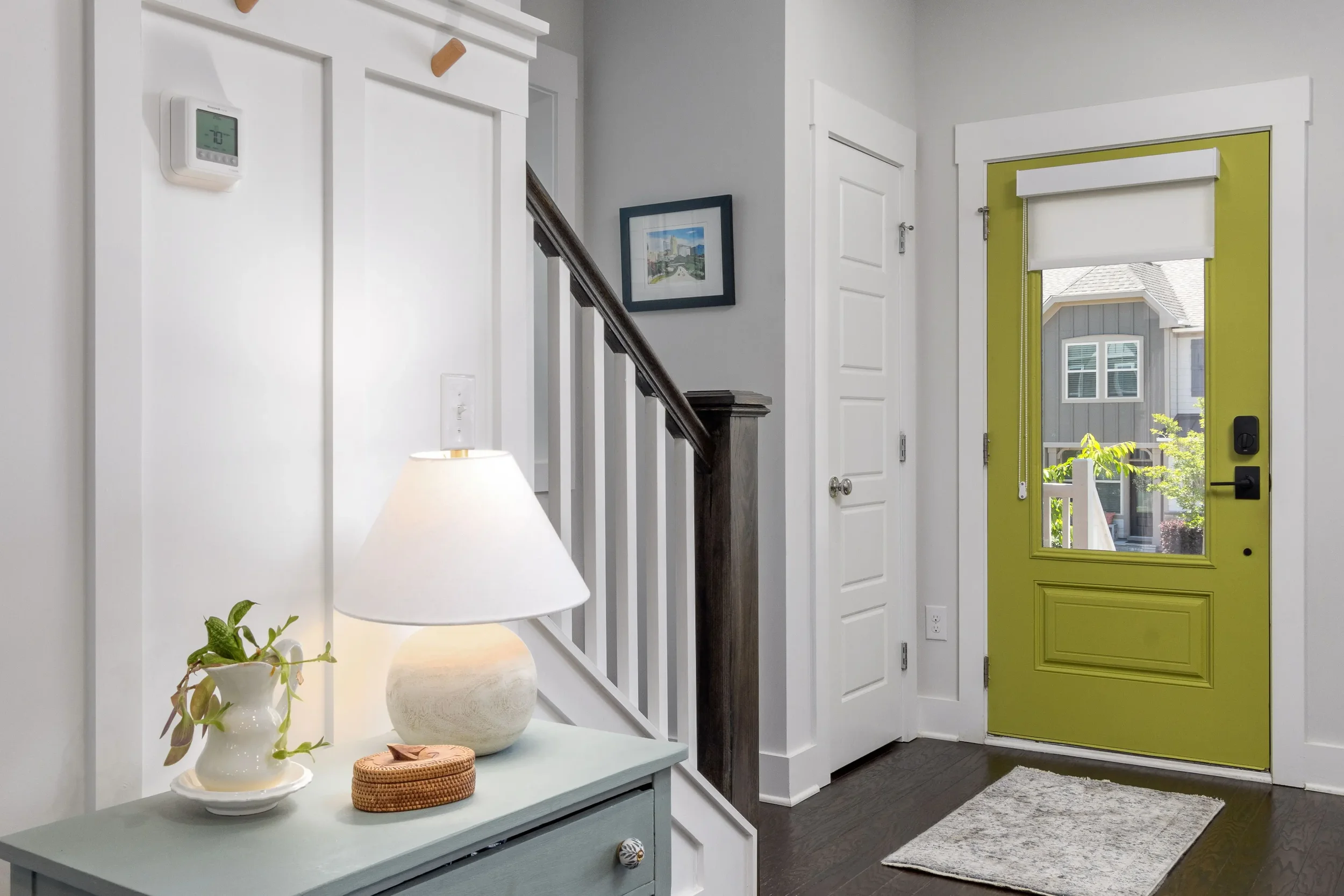
The entryway is the first interior space buyers encounter, which makes it one of the most important areas to get right.
An entry doesn't need much. In fact, less is often more. A clear path, good lighting, and a few carefully chosen elements can make the space feel immediately more open and welcoming.
Start by removing the things that naturally accumulate near the door: shoes, bags, mail, pet supplies, coats, and everyday clutter. Buyers need to be able to walk into the home without navigating around your life.
If there is a console or entry table, keep the surface simple. A lamp, a small piece of artwork, or a single decorative object is often enough.
And don't overlook the front door itself. Buyers begin forming an impression before they ever step inside. A clean entry, tidy porch, attractive doormat, and well-maintained door can make the transition into the home feel intentional rather than neglected.
Living Spaces Matter Most
Once buyers enter the home, living rooms and other gathering spaces often play a major role in shaping their overall impression.
The goal isn't to create a showroom. It's to help buyers immediately understand how the space works.
Furniture should be arranged to create clear, comfortable conversation areas and natural pathways through the room. Pieces that are too large, too numerous, or pushed against every wall can make a room feel smaller than it actually is.
This is where staging can make a meaningful difference. Rather than simply adding attractive furniture and accessories, professional staging considers scale, proportion, sightlines, and how each room connects to the next.
Buyers should be able to move through the home easily and understand the purpose of each space without having to figure it out themselves.
Don't Forget the View From the Doorway
One of the easiest staging details to overlook is what buyers see the moment they enter each room.
Stand in the doorway and look at the room as if you've never seen it before.
What catches your eye first?
Is it a beautiful architectural feature? A great window? A fireplace? Or is it a pile of laundry, an oversized piece of furniture, or a television dominating the room?
This simple exercise can reveal distractions that you no longer notice because you've lived with them for so long.
Staging often involves directing attention toward a home's strongest features and away from the things that compete with them.
Small Details Make a Big Difference
You don't always need a major investment to improve the way a home feels. Small details can have an outsized effect on a buyer's experience.
Consider:
Fresh towels in bathrooms
Simple, neutral bedding
Clean, uncluttered countertops
A restrained table setting
Fresh flowers or a small amount of greenery
Open curtains and clean windows
Replaced burned-out light bulbs
Consistent, warm lighting throughout the home
Removing excessive personal photographs and collections
These details communicate something important without saying a word: this home has been cared for.
That feeling can influence how buyers interpret everything else they see.
Clean Matters More Than Decor
It's tempting to think about pillows, artwork, and accessories when preparing a home for sale. But presentation starts with the basics.
A beautifully staged room cannot overcome dirty floors, dusty surfaces, smudged windows, or a bathroom that doesn't feel fresh.
Before adding anything decorative, focus on making the home feel clean, maintained, and ready for someone new to move in.
And remember that buyers notice things sellers have learned to overlook. Scuffed walls, loose cabinet hardware, burned-out bulbs, dripping faucets, and worn thresholds may seem insignificant individually, but together they can create an impression that a home hasn't been well maintained.
The Role of Scent, Light, and Temperature
First impressions aren't purely visual.
Buyers experience a home with all of their senses. Strong odors, stuffy rooms, overly warm temperatures, or harsh lighting can affect how a property feels even when everything looks great.
Before a showing:
Open curtains and blinds to maximize natural light.
Turn on lights in darker rooms.
Make sure the temperature feels comfortable.
Avoid strong air fresheners or heavily scented products.
Address the source of unpleasant odors rather than trying to cover them up.
The goal is for the home to feel fresh and comfortable—not fragranced.
Your Home's First Impression Starts Online
There's another first impression to consider before a buyer ever walks through the door: your listing photos.
Most buyers will encounter your home on a screen before they encounter it in person. That means the way the home looks in photographs can determine whether someone decides to schedule a showing in the first place.
The same principles apply online: clear spaces, thoughtful furniture placement, good lighting, and strong visual focal points help a home photograph well.
This is one reason preparation and staging should happen before professional photography—not after.
Creating a Memorable Experience
Buyers may tour several homes in a single weekend. When seeing one house after another, details begin to blur together.
A well-presented property has a better chance of standing out.
That doesn't necessarily mean it needs to be the most expensive or most dramatically decorated home they see. Often, it's the home that simply felt good.
The rooms made sense. The house felt cared for. There was enough furniture to understand the spaces without feeling crowded. The lighting was inviting. Nothing distracted from the home's best features.
Those impressions can linger after the showing is over.
And ultimately, that's what effective staging is designed to do: create an experience that helps buyers remember the property for the right reasons.
First Impressions Don't Require Perfection
One of the biggest misconceptions about preparing a home for sale is that everything needs to be renovated before listing.
It doesn't.
The goal isn't to erase every imperfection or make your home look like a magazine spread. It's to make thoughtful decisions about where your investment will have the greatest impact.
Sometimes that means removing furniture rather than buying it. Sometimes it's repainting a room, replacing outdated bedding, or simply clearing a countertop. And sometimes it means recognizing that a space needs a professional eye to determine what should stay, what should go, and what needs to be added.
The best preparation isn't necessarily the most expensive preparation. It's the preparation that makes the home easier for buyers to understand, appreciate, and imagine as their own.
For Brokers
For brokers, the first impression begins well before the showing.
It starts with the listing presentation, continues through the photography and online marketing, and culminates when a buyer walks through the front door.
Essential Home Staging works with brokers throughout Western Washington to prepare listings for that entire experience. Thoughtful staging can elevate presentation, improve marketing photography, clarify how spaces function, and help a property stand out in a competitive market.
Because when buyers have more homes to choose from, making a strong first impression isn't just about making a house look good.
It's about making it memorable.